
As businesses in the Philippines continue to modernize operations, many organizations are replacing disconnected HR tools, spreadsheets, and manual processes with integrated Human Resource Information Systems (HRIS). One platform increasingly gaining traction is Odoo.
For Philippine companies, implementing an HRIS is no longer just about digitizing employee records. It is now about improving employee experience, streamlining payroll coordination, ensuring labor compliance, and giving management real-time visibility into workforce operations.
This is where Odoo HRIS stands out.
 An overview of your employees in the Employee App
What is Odoo HRIS?
Odoo HRIS is a fully integrated human resources management system that centralizes HR operations into a single platform.
Instead of using separate systems for attendance, leave management, recruitment, employee records, payroll inputs, and performance tracking, Odoo allows companies to manage everything within one ecosystem.
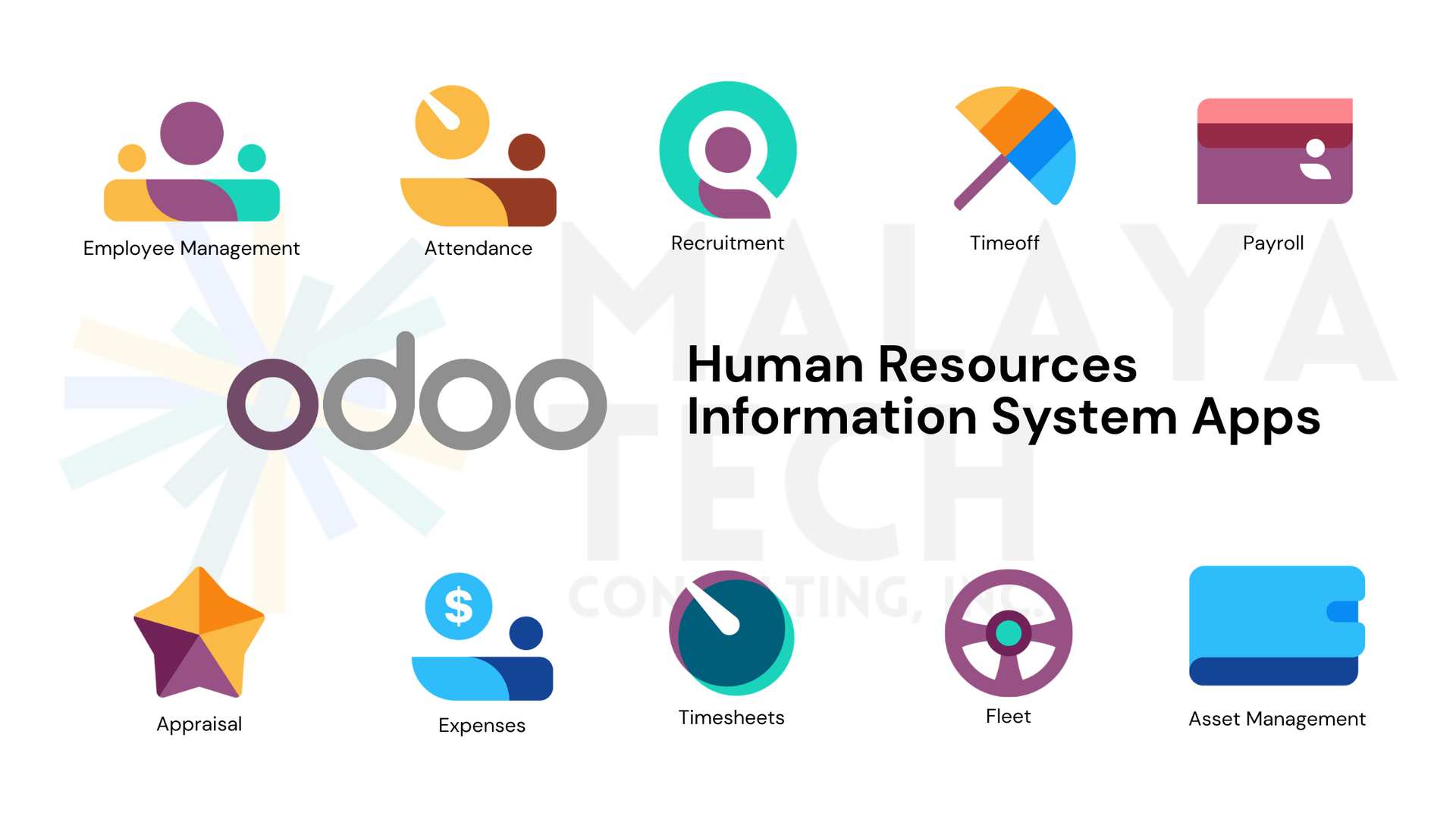
Core HR modules typically include:
- Employee Management
- Recruitment
- Attendance
- Time Off / Leave Management
- Payroll Integration
- Appraisals
-
Expenses
- Shift Scheduling
- Timesheets
- Fleet and Asset Tracking
For Philippine businesses, this creates a more efficient and compliant HR environment while reducing administrative overhead.
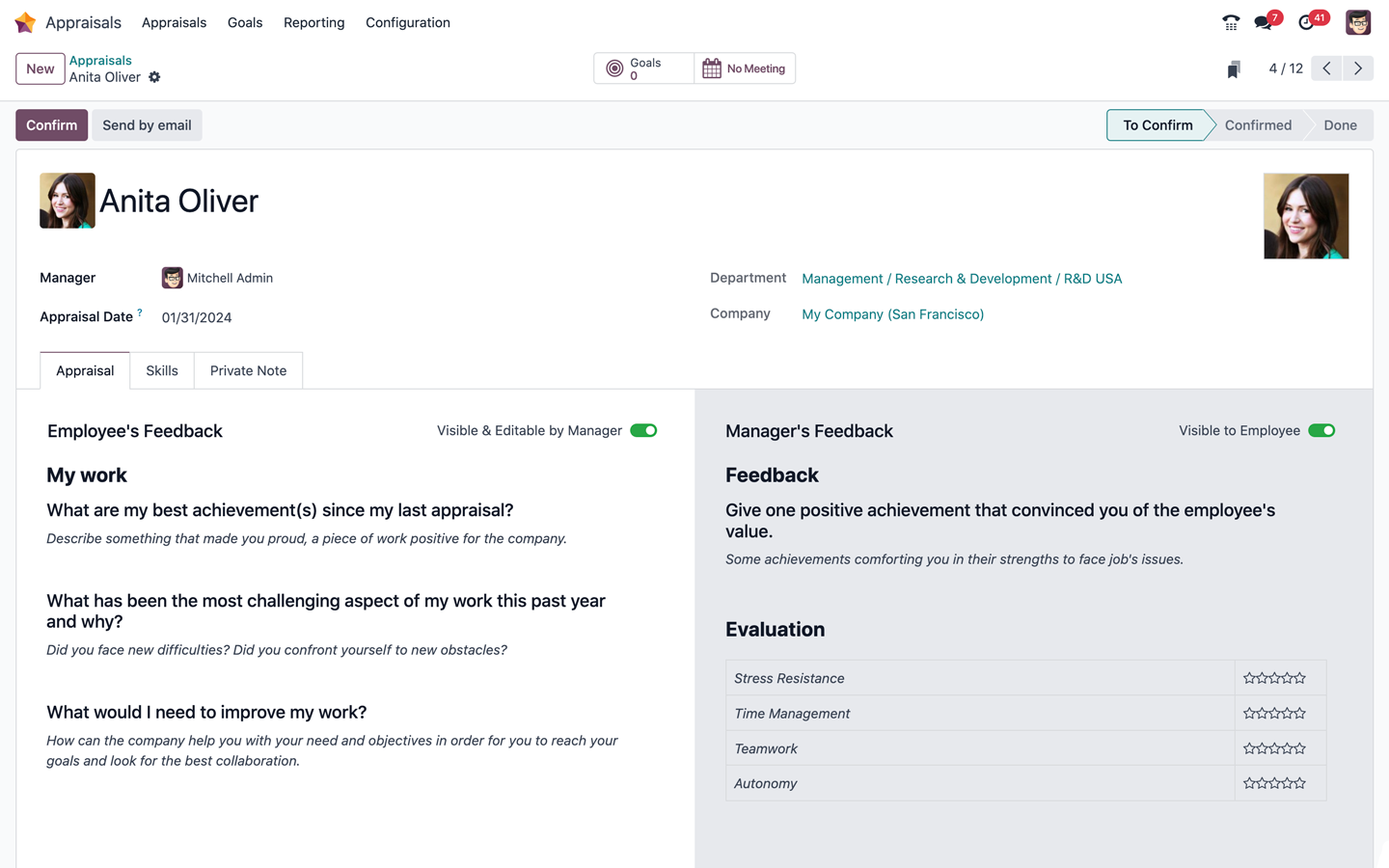 An overview of the Appraisal App
Why Philippine Companies Need a Modern HRIS
Many growing companies in the Philippines still experience common HR operational issues such as:
- Manual leave tracking through spreadsheets
- Attendance discrepancies
- Delayed payroll coordination
- Inconsistent employee records
- Difficult government compliance reporting
- Lack of employee self-service
- Multiple disconnected systems
As organizations scale, these inefficiencies become expensive and difficult to manage.
An integrated HRIS implementation in the Philippines helps businesses:
- Improve HR process automation
- Reduce payroll preparation time
- Minimize manual encoding errors
- Enhance employee experience
- Improve data accuracy
- Support labor law compliance
- Enable better workforce reporting
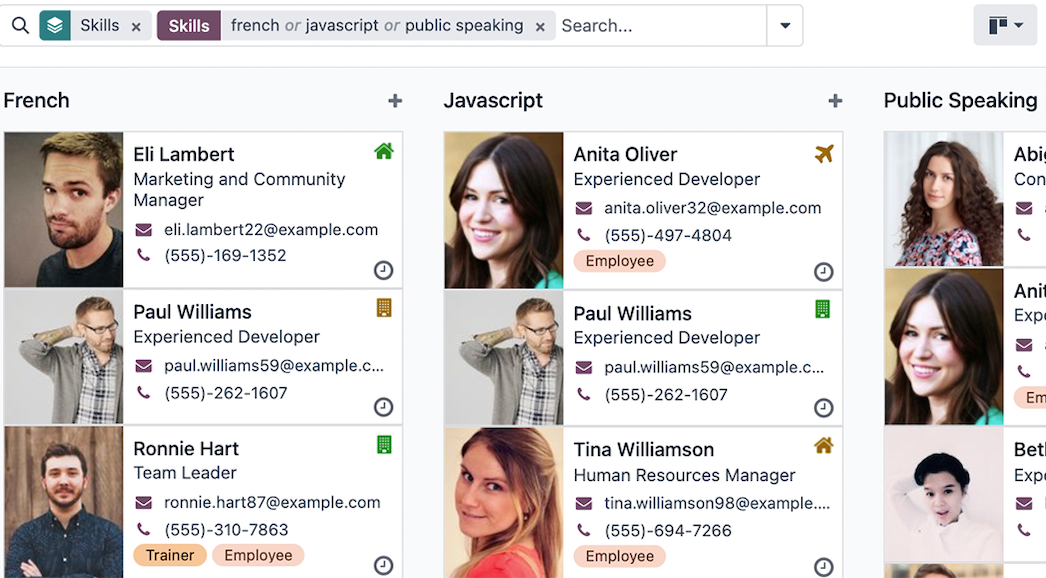 An overview of your employees in the Employee App
Key Features of Odoo HRIS for Philippine Businesses
1. Centralized Employee Database
Odoo allows HR teams to maintain a complete employee profile including:
- Personal information
- Employment history
- Government IDs
- Contracts
- Salary structures
- Emergency contacts
- Uploaded documents
This eliminates scattered records across multiple spreadsheets and folders.
2. Attendance and Time Tracking
Philippine companies with onsite, hybrid, or field employees benefit significantly from Odoo’s attendance management features.
Capabilities include:
- Biometric integration
- RFID integration
- Mobile attendance
- GPS-based attendance
- Shift scheduling
- Overtime tracking
This improves accuracy for payroll preparation and labor monitoring.
3. Leave Management Automation
Employees can submit leave requests through the employee portal while managers approve requests digitally.
Common Philippine leave types include:
- Vacation Leave (VL)
- Sick Leave (SL)
- Emergency Leave
- Maternity Leave
- Paternity Leave
- Solo Parent Leave
- Service Incentive Leave (SIL)
Odoo automates leave balances, approval workflows, and notifications.
4. Payroll Coordination and Integration
While payroll implementations vary per company, Odoo can support payroll workflows by integrating:
- Attendance data
- Approved leaves
- Overtime hours
- Allowances
- Deductions
Philippine payroll structures often include:
- SSS
- PhilHealth
- Pag-IBIG
- Withholding Tax
- 13th Month Pay
- Holiday Pay
- Night Differential
An experienced Philippine Odoo implementation partner, like Malaya Tech Consulting, Inc., can localize these requirements properly.
5. Employee Self-Service Portal
Employees can independently access:
- Leave balances
- Payslips
-
Attendance records
- Expense claims
- Personal profile updates
This reduces repetitive HR inquiries and improves employee satisfaction.

Benefits of Implementing Odoo HRIS in the Philippines
Improved Operational Efficiency
Automation reduces repetitive administrative tasks, enabling HR teams to focus on strategic initiatives instead of manual paperwork.
Better Data Accuracy
A centralized HR database minimizes duplicate records and encoding errors.
Scalability for Growing Businesses
Whether your organization has 20 employees or 2,000 employees, Odoo scales according to business needs.
Real-Time Reporting
Management gains visibility into:
- Attendance trends
- Leave utilization
- Workforce headcount
- Recruitment progress
- Employee turnover
This supports faster and more informed decision-making.
Integration Across Departments
Unlike standalone HR systems, Odoo integrates HR with:
- Accounting
- Payroll workflows
- Project Management
- Helpdesk
- ERP Operations
- Inventory
- CRM
This creates a unified digital ecosystem for the organization.
Important Considerations for Odoo HRIS Implementation in the Philippines
Successful HRIS implementation requires more than software installation.
1. Philippine Labor Compliance
Your HRIS must align with local labor requirements and government-mandated computations.
This includes:
- DOLE regulations
- Leave policies
- Payroll calculations
- Mandatory contributions
- Holiday computations
Localization expertise is critical.
2. Change Management
Employees and HR teams must adapt to new workflows and digital processes.
A successful rollout should include:
- User training
- Process alignment
- Documentation
- Transition planning
- Executive sponsorship
3. Process Mapping
Before implementation, companies should review existing HR processes and identify:
- Manual bottlenecks
- Approval workflows
- Policy inconsistencies
- Reporting requirements
This ensures the HRIS is configured properly.
4. Integration Requirements
Some companies may require integrations with:
- Biometric devices
- Existing payroll systems
- Accounting software
- Government reporting tools
- Recruitment platforms
A technical assessment should be conducted early in the project.
Typical Odoo HRIS Implementation Timeline
Implementation timelines depend on scope and complexity.
| Company Size | Estimated Timeline |
|---|---|
| Small Business | 6 to 8 months |
| Mid-Sized Company | 8 to 10 months |
| Enterprise | 10 to 12 months |
Factors affecting timeline include:
- Number of employees
- Customization requirements
- Data migration complexity
- Payroll localization
- Integration scope
- User training requirements
Industries in the Philippines Benefiting from Odoo HRIS
Odoo HRIS is widely applicable across industries including:
- Manufacturing
- Retail
- Distribution
- Construction
- Professional Services
- Healthcare
- Logistics
- Real Estate
- Food and Beverage
- Technology Companies
Organizations with multi-branch operations particularly benefit from centralized HR visibility.

Why Work with an Experienced Odoo Implementation Partner in the Philippines
Implementing an HRIS involves both technology and business process transformation.
A local Philippine implementation partner can help with:
- HR workflow design
- Philippine compliance localization
- Payroll alignment
- Data migration
- User training
- Post-go-live support
- Custom development requirements
Choosing the right implementation partner significantly affects project success.
Final Thoughts
As Philippine companies continue digital transformation initiatives, implementing a modern HRIS becomes a strategic investment rather than simply an HR upgrade.
Odoo provides businesses with a flexible and scalable platform capable of centralizing HR operations while supporting local business requirements.
For organizations looking to improve efficiency, employee experience, reporting accuracy, and operational scalability, Odoo HRIS offers a strong foundation for long-term growth.
Looking for Odoo HRIS Implementation in the Philippines?
Malaya Tech Consulting, Inc. helps Philippine businesses implement customized Odoo solutions tailored to local operational and compliance requirements.
Whether you are starting your digital HR transformation or upgrading from legacy systems, working with an experienced local Odoo partner can help ensure a smoother and more successful implementation journey.